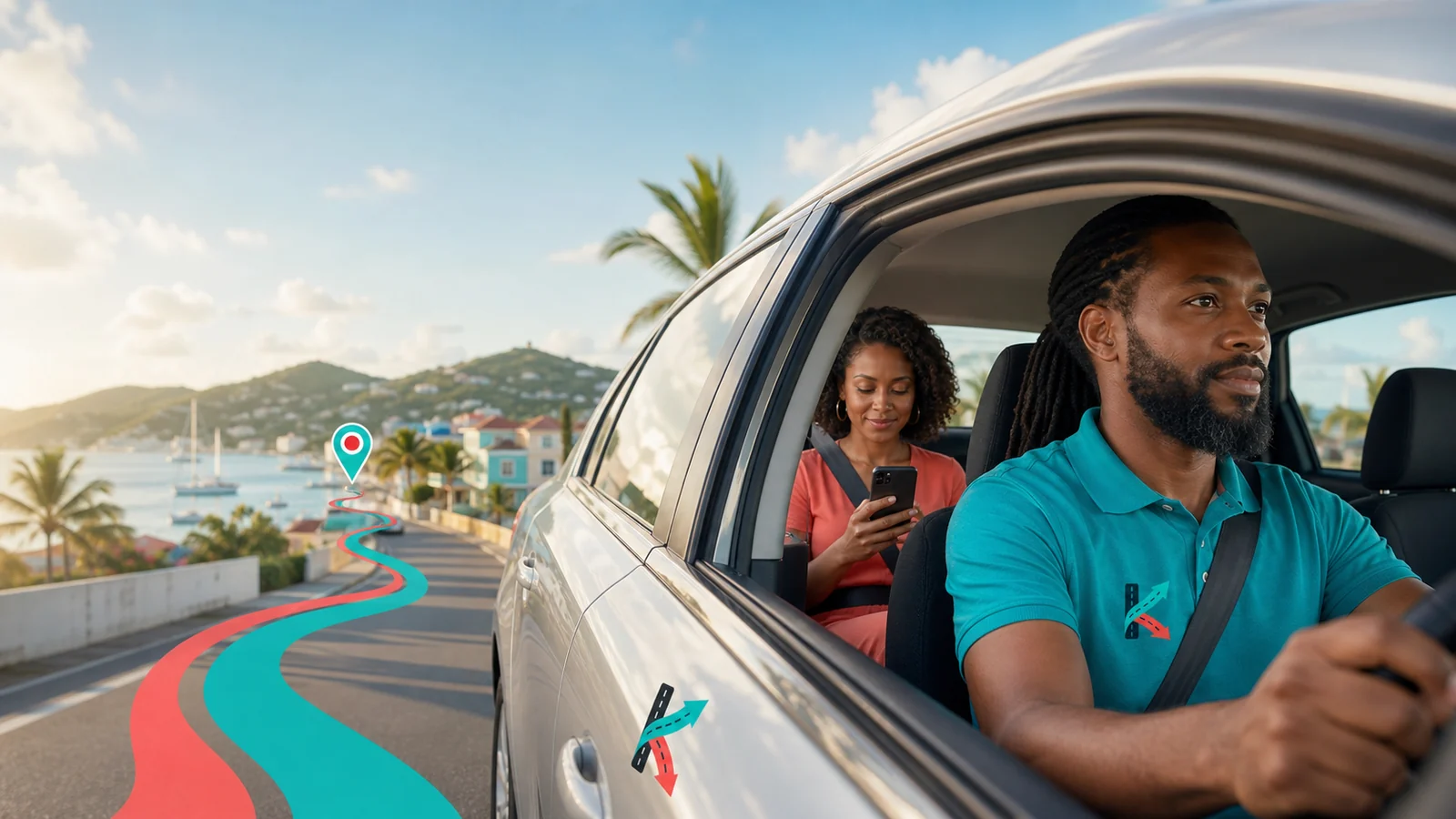
Short answer: KiloDrive's active-trip location design is narrowly tied to a real assignment: while the driver is approaching, has arrived or the trip is in progress. It helps update the rider's map and safety signals, can support an expiring trip-share link, and stops when the trip completes, is cancelled or the assignment ends. Location can still be delayed or unavailable, so the app must show freshness rather than pretending a frozen dot is live.
Location is useful because a ride continues after the app leaves the foreground. A driver may lock the phone for navigation, receive a call or move between coverage areas. At the same time, background collection is sensitive and consumes battery. The right design is not “track everything”; it is collect what the active journey needs, make the activity visible and stop promptly.
What this means A live-looking map is not enough. Check whether the location says Live, shows when it was last updated or says the driver location is temporarily unavailable. In an emergency, use the local emergency option rather than waiting for a dot to move.
When active-trip collection begins and ends
KiloDrive creates a scoped telemetry session for an assigned trip. The intended lifecycle covers the driver's approach, arrived state and in-progress journey. The service is not supposed to turn an ordinary signed-in driver into a permanently tracked person. Completion, cancellation or removal of the assignment ends the active session and its user-visible indication.
On Android, active-trip tracking uses the location foreground-service category and a persistent notice that location is shared for navigation and safety. Android requires background access to be important and obvious to the user. Apple platforms require the relevant Core Location capability and authorization, with visible system indicators where applicable.
Permissions remain under device control. If access is removed, the phone is off or connectivity fails, KiloDrive cannot produce a current position. The app should explain this before offers and expire an online state when telemetry becomes stale.
What the rider should see
After assignment, the rider can see the driver's movement toward pickup when permitted telemetry is fresh. The display should include age and quality context, not only a marker. A recent accurate sample can be labelled Live. An older sample should say how long ago it arrived. Beyond a configured threshold, the truthful state is Driver location temporarily unavailable.
Stored samples and map matching can support replay and route analysis, but GPS may drift near buildings, tunnels or parallel roads. Location alone must never complete, cancel or settle a trip.
Sharing a trip without publishing a person's life
A rider can create a trip-scoped share where the feature is available. The handle is opaque, time-limited and revocable. Its bounded view excludes private chat, payments, contact details and identity documents, and expires when the trip closes.
This design reflects data-minimisation principles. The UK Information Commissioner's Office says personal data should be adequate, relevant and limited to what is necessary. KiloDrive's Privacy policy explains the public retention and control position; the Safety page describes current user-facing tools. A user should share only with someone they trust and revoke a link if it reaches the wrong person.
What a route-change alert means
RideCheck-style monitoring can compare active-trip telemetry with the expected route and open a safety check for a meaningful deviation, unexpected stop or telemetry gap. An alert asks the rider whether everything is okay and can offer actions such as allowing the change, contacting support or using the country-specific emergency option. The response is logged as part of the safety timeline.
An alert is not an accusation. Closures, police direction, weather, traffic, a missed turn, a requested stop or GPS noise may explain a deviation. Accuracy, persistence and map context should reduce false positives before a person responds. It must not turn noisy location into an automatic finding of speeding, distraction, collision or misconduct.
Practical habits for riders and drivers
Riders: confirm the driver and vehicle, share only when useful, read freshness, and do not assume every detour is dangerous. For immediate help, use the local emergency channel.
Drivers: enable the requested location permission before going online, keep the persistent trip indication visible, mount the phone safely and do not interact with detailed controls while moving. The US National Highway Traffic Safety Administration treats distracted driving as a serious road-safety issue; safety tooling should reduce interaction, not add it.
Both parties can report a real problem through KiloDrive's structured support and contact routes, but a support case is not a substitute for emergency services.
What is still uncertain
No mobile platform guarantees uninterrupted background execution, GPS accuracy, network delivery or notification delivery. Feature behavior also depends on permissions, battery management, country policy and current service readiness. KiloDrive's recording and driving-behavior insight designs are separately gated and are not implied by active-trip location. This article must be rechecked against the signed Android and iOS release behavior and the selected country's privacy and safety policy before publication.
Frequently asked questions
Does KiloDrive track a driver all day?
No. The active-trip design scopes background collection to an assigned journey lifecycle and stops it when the trip or assignment ends.
Why can the rider's map stop moving?
The phone may have weak GPS, no network, restricted permissions, low power or operating-system limits; the app should show the sample age instead of calling stale data live.
Can anyone with an old trip-share link keep tracking me?
No. The implemented share is trip-scoped, expiring and revocable, although users should still send it only to people they trust.
Does a route-change alert mean the driver did something wrong?
No. It is a safety check prompted by telemetry and route context, not a finding of fault or misconduct.
Will KiloDrive automatically call emergency services?
Do not assume so. Use the visible country-specific emergency action when immediate help is needed and follow local emergency guidance.
Sources
- Access location in the background — Android Developers.
- Handling location updates in the background — Apple Developer Documentation.
- Accessing the device's location efficiently — Apple Developer Documentation.
- Principle (c): Data minimisation — UK Information Commissioner's Office.
- Distracted Driving — US National Highway Traffic Safety Administration.